Reliable screw seal in mozzarella production
Case studies
Seals for rotating shafts
Contact person

When seals become a safety issue
In a mozzarella plant, leaks repeatedly occurred at the screw seals. The lip seals used could not withstand the demands of the process over the long term, particularly due to the abrasive nature of the salt.
This resulted in media leakage, increased maintenance costs, and restrictions on safe plant operation.

Initial situation
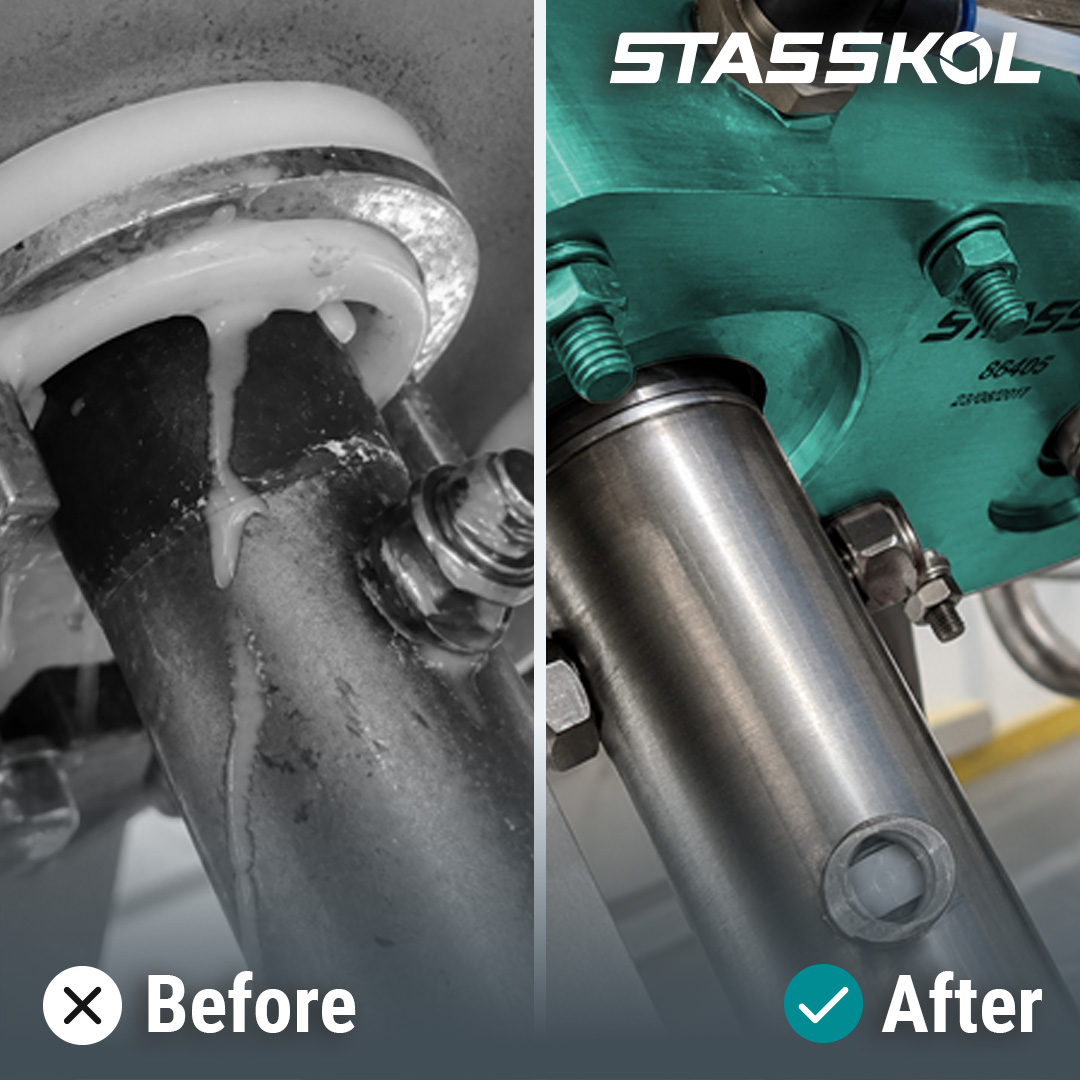
The screws were sealed using lip seals with a point-contact sealing surface. Due to the abrasive medium, these were worn through after a short time.
This caused greasy water to leak out, increasing the risk of slipping in the plant area and compromising occupational safety. At the same time, the regular replacement of the seals led to increased use of personnel and materials.
Service life was correspondingly short, and stable operation was not guaranteed.
Technical challenge
The combination of:
- abrasive medium
- localized sealing surface
- mechanical stress
resulted in the seals used failing to function reliably over the long term. The sealing was not stable and had to be replaced regularly.
Solution approach
To improve the situation, a new screw seal was developed and implemented. The new design is based on a split seal solution that can be replaced without disassembling the screws.
Additionally, the design was engineered to maintain a slight overpressure in the seal housing, causing the sealing rings to press against the housing and operate effectively.

Implementation
The new SDF was integrated into the existing system and optimized in collaboration with STASSKOL.
The following components, among others, were used:
- split sealing rings
- tension springs
- special sealing geometry with a form-fit connection
Installation was carried out without any fundamental changes to the system.
Results
Following the retrofit, a significant improvement in operation was observed:
- no more leaks in the affected area
- significantly extended service life (from weekly replacement to several months)
- improved occupational safety due to the elimination of media leakage
- reduced labor and material costs
Since then, the seal has been operating reliably and with significantly less maintenance.


Transferability
The solution shown is particularly relevant for applications involving:
- abrasive media
- screw conveyors
- hygiene-sensitive processes
- high operational safety requirements
How reliable are your sealing systems?
FAQs
In the dairy industry, abrasive media such as salt act on the seal. Lip seals with a point-contact sealing surface wear out quickly as a result, causing fatty water to leak and disrupting operations.
The lip seals used were worn through by the abrasive medium within a short period of time. This resulted in replacements nearly every week and high maintenance costs.
The new solution is based on a split seal with a puzzle-type connection. This allows it to be installed and replaced directly without disassembling the screw.
There is slight positive pressure inside the seal housing, which ensures that the PEEK sealing rings fit securely against the housing. Thanks to their special geometry, they are also guided and operate smoothly.
After the retrofit, no leaks occurred. Service life increased from weekly replacements to over three months, while occupational safety was significantly improved.
No. The case study originates from mozzarella production but is applicable to many screw conveyors – particularly those handling abrasive media and subject to high requirements for sealing and operational reliability.